From diversity to connection – multiculturalism vs interculturalism
Last month’s World Day for Cultural Diversity for Dialogue and Development (21st May) offers us a valuable opportunity to not only reflect on the rich diversity of the communities we serve but also how we choose to engage with that diversity.
When we talk about cultural diversity and inclusion, the term ‘multiculturalism’ often surfaces. Less known perhaps is the term ‘interculturalism’. Whilst the two terms are closely related, they represent different ways of thinking about diversity – and understanding this difference can help us build stronger and more connected communities across Gloucestershire.
What do we mean by multiculturalism?
Multiculturalism can be understood as the coexistence of diverse cultures within a single society. It focuses on recognising, respecting and celebrating cultural differences and supports the idea that people from diverse cultural backgrounds should be able to maintain their identities whilst living within the same society.
When we think about multiculturalism we might think about:
- celebrating different cultural festivals
- supporting communities rooted in specific identities
- ensuring representation and equal access to opportunities.
At its core, multiculturalism plays a crucial role in promoting fairness, representation and respect. It helps organisations, including ours, acknowledge that inclusion starts by recognising difference.
However, multiculturalism can sometimes stop at coexistence. Communities can often live side by side, but without meaningful interaction, understanding and empathy. And as a result, rich and beautiful heritages can sometimes (wrongly) be reduced to convenient, surface-level stereotypes, with rigid, unchanging traits.
Moving towards interculturalism
Interculturalism builds on the foundations laid by multiculturalism but asks a deeper question: what might happen if we actively bring people from different cultures together?
It moves beyond simply recognising diversity and focuses more on interaction, dialogue and shared experiences. It values the creation of opportunities to connect, learn from one another and shape something new together.
Within the context of our work, this may involve:
- designing programmes that encourage or enable cross-community participation
- creating and holding spaces where people feel safe to share experiences and stories
- training that builds cultural competence and curiosity, not simply cultural awareness – for example, whilst a culturally aware coach may recognise that Muslim athletes fast during Ramadan and therefore won’t be eating during daylight hours, a culturally competent coach would look to shift practice or match times to the evening and rethink hydration protocols.
Interculturalism acknowledges that inclusion is not passive, but that it requires intention and effort.
Why does the distinction matter?
There is no doubt that both approaches are uniquely important, but they both offer different outcomes.
Multiculturalism enables communities to exist alongside each other, protect their heritage and create space for cultural traditions to be honoured and practiced. It allows communities to be seen and respected.
Interculturalism goes further. It builds bridges and helps communities feel connected and understood. Rather than simply acknowledging difference, interculturalism creates mechanisms to pull communities together – music and culinary events, art exhibitions, collaborative local projects or cross-cultural volunteering partnerships – tools that ensure cultural differences don’t lead to isolation, misunderstanding and conflict.
Without multiculturalism – we risk exclusion.
Without interculturalism – we risk separation.
We risk a society in which communities live side by side, but with little or no meaningful engagement. And, without shared, foundational norms, without a common or shared sense of purpose – fear, mistrust and alienation can develop.
In our work across Gloucestershire – we see the impact of both. We know that representation matters – but so does belonging. And often belonging grows through shared experiences such as playing sport together, listening to and learning from one another and showing up in spaces where differences are not only acknowledged, but celebrated and engaged with.
What this means for Active Gloucestershire
As an organisation whose mission it is to tackle inequality in sport and physical activity, across all our work areas, we are increasingly thinking about how we move from diversity to connection. How do we move beyond simply acknowledging difference and respecting lived experience, to ensuring the communities we work with feel connected to one another and develop a sense of belonging, autonomy and ownership over their lives and outcomes?
So, as we look ahead, particularly with regards to our work around equality, diversity and inclusion and specifically our diversity and inclusion action plan, we will be exploring how we can:
- build mutually rewarding, equitable and non-tokenistic relationships with strategic community partners
- engage in genuine co-design and co-production, ensuring shared power and mutual respect
- hold space for communities from mixed faiths and cultures to come together and connect over common barriers, concerns and opportunities.
And as we do so, we will endeavour to consider the following:
- Are we creating spaces where people simply coexist, or where they can truly connect?
- Are we celebrating difference, but also fostering understanding and exchange?
- How can we move from awareness to action in our everyday work?
Conclusion
There is no single model that fits every community and no one-size fits all roadmap to follow. And so, missteps may be made. But – we will learn from them.
We also acknowledge the inherent complexity of this approach, particularly against the backdrop of growing social division, public anxiety and cultural tensions.
However, if we are to succeed in our mission to tackle inequality, to drive change and improve the lives of marginalised communities across Gloucestershire, we must commit wholeheartedly to this journey and work with our partners to create stronger, more inclusive and connected communities.
Related content
28 Sep 2026
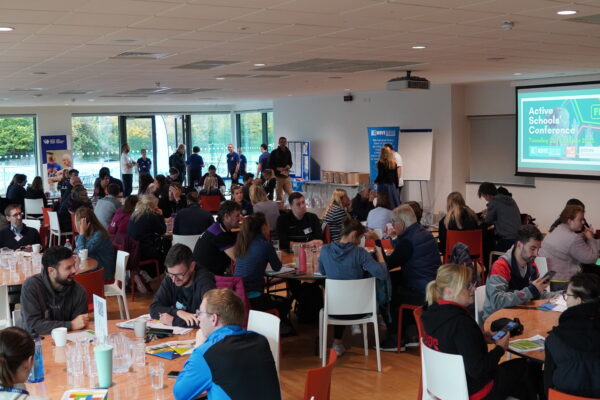
National Education and Physical Activity Leaders to Gather in Gloucestershire for the Active Schools’ Conference 2026
Read more

21 Sep 2026
Fall-Proof Returns to the Spotlight Across Gloucestershire, Helping Older Adults Stay Strong, Steady and Independent
Read more
01 Sep 2026
Fall Proof
Read more
02 Jul 2026
Active Gloucestershire launches summer campaign to help people get active in their local communities
Read more