From awareness to action: what World Environment Day means for Active Gloucestershire
June 5th was World Environment Day, a day on which attention rightly turns to the health of our planet and the action needed to protect it.
Here in Gloucestershire, that conversation feels especially timely following the recent launch of the Active Gloucestershire and we can move Environmental Sustainability Strategy and Action Plan 2026–2031. At its heart is a simple but powerful ambition: to create sustainable communities in sustainable places, where people can be active every day in environments that support both their wellbeing and the long-term health of the planet.
This matters now more than ever because climate change is no longer a distant or abstract challenge. Its effects are already being felt in very real ways across our county. Flooding, extreme heat, declining air quality and pressures on green spaces are all impacting people’s ability to be active. Nationally, three in five adults and children report that extreme weather affects their participation in physical activity and locally we see pitches lost either to flooding or extreme heat, disrupted league programmes and reduced informal opportunities to move. These impacts are not shared equally as they tend to fall hardest on those communities already facing the greatest barriers to being active, compounding existing inequalities.
Our new strategy responds to this challenge with a clear sense that environmental sustainability is not an “add-on” to our work, rather it is fundamental to it.
Physical activity depends on healthy environments: clean air, safe streets, accessible parks, resilient facilities. At the same time, the sector itself has an environmental footprint through travel, energy use and supply chains. Recognising this, the strategy takes a dual-purpose approach: reducing Active Gloucestershire’s own impact while using the collective strength of the We Can Move movement to enable wider system change.
That collective effort is where the real opportunity lies. Across Gloucestershire, We Can Move brings together partners from sport, health, the voluntary sector, local government and communities. This reach means the movement is uniquely placed not just to respond to climate challenges, but to shape behaviours, influence decisions and reimagine the environments in which people live and move. The strategy provides a shared direction of travel, built around seven themes including net zero, active travel, sustainable facilities, access to green and blue spaces, waste and circularity and tackling inequalities. Together, these themes connect environmental action to the everyday realities of people’s lives.
Looking ahead, the coming year is less about the strategy itself and more about the momentum that can grow from it. This is the point where ambition begins to translate into action. For some organisations and groups, that will mean taking their first steps – starting conversations about sustainability, exploring how events can reduce waste, or encouraging more active forms of travel. For others, it will mean building on existing work, deepening commitments around energy use, procurement or land management. What matters is not where people start, but that they start.
A key part of this next phase will be learning together. The strategy recognises that organisations across the system are at different stages in their journey, and that progress depends on sharing insight, challenges and ideas. Whether through forums, training, case studies or peer support, creating space for collaboration will be essential. Environmental sustainability can often feel complex or technical, but one of the most important roles for We Can Move is to make it accessible – connecting it to lived experience and showing how practical, achievable changes can make a difference.
There is also a significant opportunity to ensure that environmental action strengthens, rather than sidelines, the movement’s commitment to equity. Improving access to green and blue spaces, investing in safer active travel routes, and supporting more resilient facilities can all help remove barriers to physical activity. Done well, sustainability work can contribute directly to healthier, fairer communities, ensuring that the benefits of change are shared more equally.
World Environment Day is often framed as a moment for awareness, but in Gloucestershire it feels more like a moment for action and for leadership at every level. Not just from organisations, but from clubs, volunteers, practitioners and communities who together make up the fabric of We Can Move. The strategy makes clear that while no single organisation can solve this challenge alone, there is enormous potential in collective action.
Ultimately, the message is both simple and hopeful. Creating sustainable communities is not about perfection, it is about progress. It is about trying new ideas, starting conversations, taking practical steps and sharing what works. The invitation is open to everyone, regardless of where they are on their journey. Together, there is an opportunity to create places where the environment supports active lives, and active lives help sustain the environment, for this generation and for those that follow.
Related content
28 Sep 2026
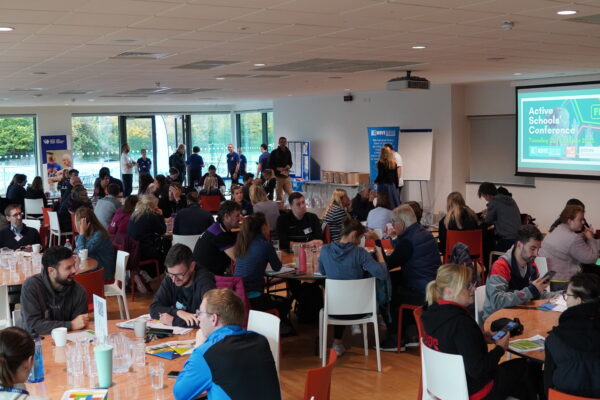
National Education and Physical Activity Leaders to Gather in Gloucestershire for the Active Schools’ Conference 2026
Read more

21 Sep 2026
Fall-Proof Returns to the Spotlight Across Gloucestershire, Helping Older Adults Stay Strong, Steady and Independent
Read more
01 Sep 2026
Fall Proof
Read more
02 Jul 2026
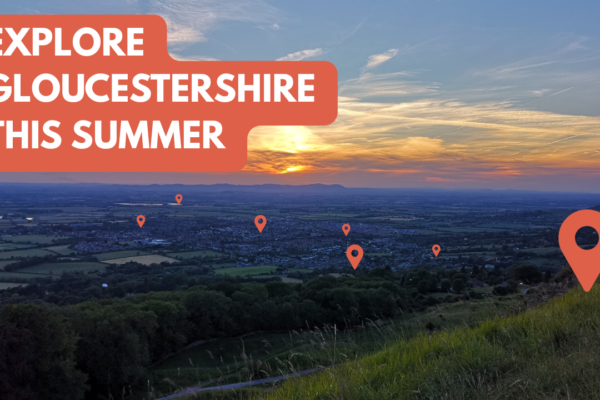
Active Gloucestershire launches summer campaign to help people get active in their local communities
Read more